
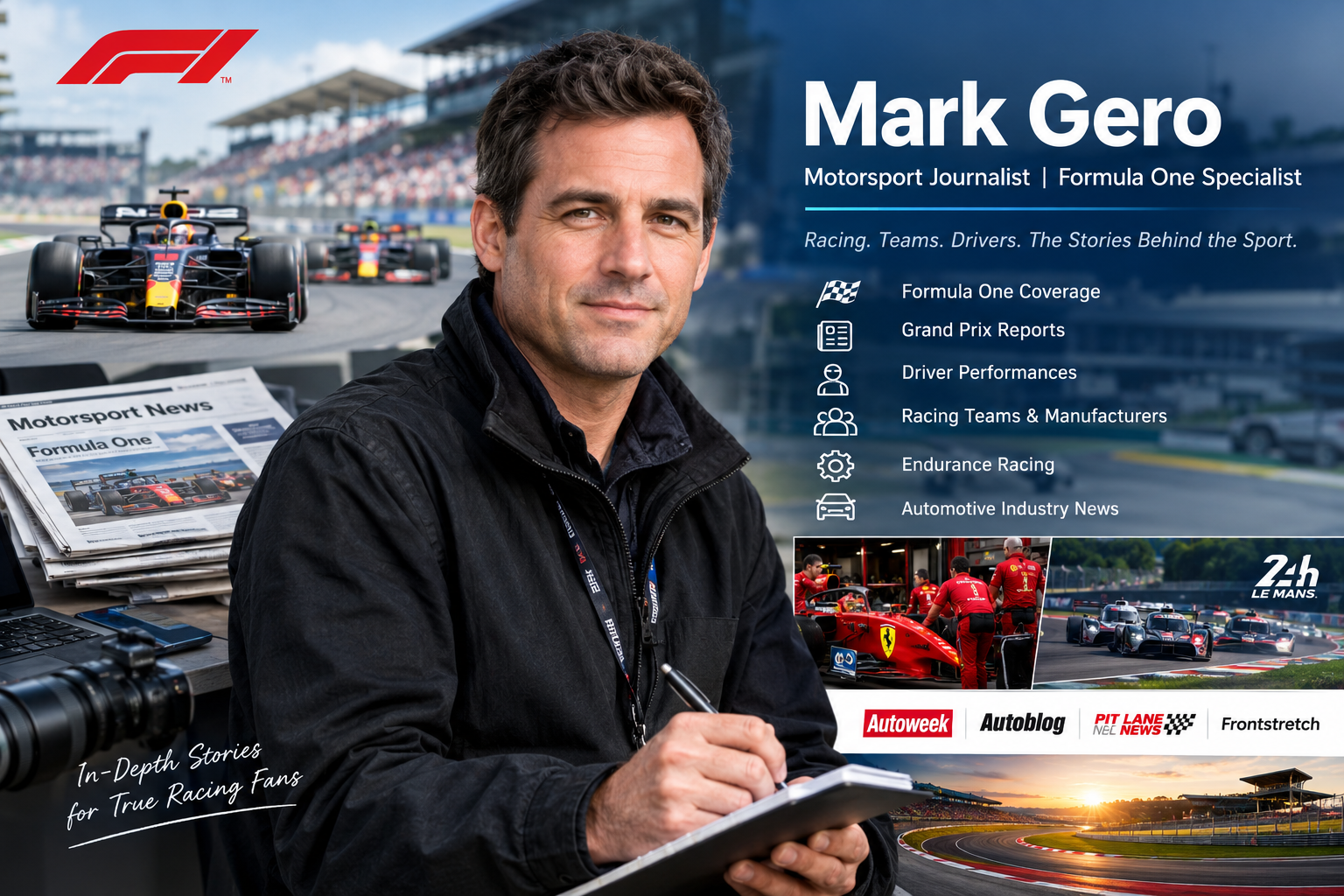
The world of motorsports attracts millions of fans who follow Formula One races, international competitions, driver performances, and exciting developments in the automotive industry. Behind these sporting events are professional journalists who help audiences understand the stories, strategies, and achievements that shape the racing world. Mark Gero is a motorsport journalist recognized for his coverage of Formula One, Grand Prix events, and international racing competitions. His professional experience includes writing race reports, feature stories, team updates, and articles about important developments in motorsports. Through his journalism career and contributions to different publications, he has developed a professional identity connected to automotive reporting and racing news. This article explores his biography, educational background, journalism career, professional portfolio, published work, and contributions to the motorsport media industry.
Who Is Mark Gero?
Mark Gero is an American motorsports journalist whose professional specialization focuses primarily on Formula One and international racing coverage. He is known for reporting on Grand Prix competitions, racing teams, driver performances, and developments within the automotive industry. His professional background includes approximately 15 years of motorsport journalism experience, according to his published journalist biography. Over the years, his articles have appeared in publications covering automotive news, professional racing, and international motorsports. His reporting provides readers with information about competitive racing events and the people and organizations involved in the industry. His professional journey demonstrates how specialized journalism can connect sporting knowledge with informative storytelling.
Mark Gero Biography and Professional Overview
Understanding a journalist’s background helps readers discover their professional experience, areas of specialization, and contributions to a particular industry. Mark Gero has developed his career around motorsport reporting, with Formula One serving as his primary area of interest. His professional biography highlights journalism education, racing knowledge, and experience writing about international competitions. His work covers several important aspects of motorsports, including race results, qualifying performances, team developments, and manufacturer activities. These subjects appeal to readers who want detailed information about racing beyond basic competition results.
Early Life and Educational Background
Education and professional training can play an important role in developing the communication and research skills required for a successful journalism career. Mark Gero’s publicly available professional biography mentions educational experience at the London School of Journalism and Ashford University. These institutions are associated with his academic background and professional development. His reported involvement with racing schools also reflects an interest in understanding motorsports beyond traditional sports reporting. This combination of journalism education and practical racing exposure provides useful context for understanding his professional interests. However, detailed information about his childhood, family background, and early personal experiences is not widely documented.
Journalism Education and Professional Development
Journalism requires strong writing abilities, research skills, attention to detail, and the ability to communicate complicated information clearly. Studying journalism can help writers understand news reporting, feature writing, media ethics, and professional communication. Gero’s reported educational background provides a foundation for his work in automotive and motorsport journalism. His professional development also reflects the importance of understanding the subjects being covered rather than relying only on general reporting techniques. These skills are particularly valuable in Formula One, where technical developments and competitive regulations can influence entire racing seasons.
Interest in Motorsport and Racing
Motorsport journalism involves understanding racing vehicles, team strategies, driver performance, and the technical factors that influence competition results. Gero’s reported experience with racing schools provides additional context for his interest in Formula One. Practical exposure to motorsports can help journalists understand the challenges involved in vehicle control, racing conditions, and competitive performance. This knowledge can make technical reporting easier to understand for general readers. His professional background reflects an interest in combining journalism with a deeper understanding of the racing environment.
Mark Gero’s Journalism Career
Mark Gero’s journalism career is primarily associated with Formula One reporting and international motorsport coverage. His professional experience includes writing about Grand Prix weekends, qualifying sessions, driver performances, team launches, and major racing developments. His articles explore both immediate competition results and wider developments affecting the automotive industry. This variety allows readers to understand different aspects of professional racing rather than focusing exclusively on individual race outcomes. His contributions to multiple publications also demonstrate the opportunities available to specialized freelance journalists in modern digital media.
Formula One Race Reporting
Formula One is one of the most competitive and technologically advanced motorsport championships in the world. Covering this sport requires journalists to follow practice sessions, qualifying rounds, sprint races, and Grand Prix competitions throughout the season. Mark Gero’s reporting includes coverage of major racing weekends and developments involving internationally recognized drivers and teams. His articles discuss qualifying performances, race outcomes, strategic decisions, and championship progress. This type of reporting helps fans understand the circumstances behind important racing results and competitive moments.
Grand Prix Coverage and Racing Developments
Grand Prix competitions attract international attention because every event introduces different circuits, racing conditions, and strategic challenges. Journalists cover these competitions to explain how drivers and teams respond to changing circumstances throughout a race weekend. Gero’s professional reporting includes coverage of events such as the Austrian Grand Prix, Canadian Grand Prix, Spanish Grand Prix, and Monaco Grand Prix. These races provide opportunities to examine driver performance, team preparation, qualifying results, and championship implications. His work contributes to the wider collection of motorsport reporting available to Formula One audiences.
Motorsport Feature Writing
Feature writing is another important part of professional sports journalism because it allows writers to explore stories beyond immediate race results. These articles may examine team development, manufacturer competition, driver achievements, technical regulations, and changes within the racing industry. Mark Gero’s published work includes feature coverage connected to organizations such as Ferrari, Toyota, and Renault. These subjects attract readers who want to understand the business, engineering, and competitive sides of motorsports. Detailed feature stories also provide historical and industry context that short news reports may not include.
Formula One and International Motorsport Expertise
Formula One journalism requires an understanding of racing regulations, vehicle engineering, tire management, pit-stop strategies, and team operations. Journalists must explain these subjects accurately while making their reporting accessible to readers with different levels of motorsport knowledge. Mark Gero’s professional specialization reflects an interest in these areas and their influence on racing performance. His reporting connects individual race results with broader developments affecting drivers, manufacturers, and championship competition. This knowledge helps readers explore Formula One as both a sporting competition and a technologically advanced industry.
Understanding Driver Performance
Driver performance is one of the most important subjects in Formula One journalism because individual decisions can influence the outcome of a competition. Reporters examine qualifying times, overtaking opportunities, tire management, consistency, and the ability to perform under pressure. These factors help explain why certain drivers achieve stronger results than others during a racing season. Gero’s motorsport coverage includes driver performances and competitive developments across different Grand Prix events. This subject is particularly valuable for fans who want to follow championship battles and understand the factors behind racing success.
Racing Teams and Manufacturer Developments
Formula One and international motorsports involve major manufacturers, engineering organizations, sponsors, and professional racing teams. Their activities influence vehicle development, competition strategies, and the long-term direction of the industry. Reporting on these organizations helps readers understand the business and technical factors behind professional racing. Mark Gero’s published work has included stories about manufacturers and racing teams such as Ferrari, Toyota, and Renault. These topics demonstrate how motorsport journalism extends beyond race-day reporting into automotive technology and industry developments.
Mark Gero and Endurance Racing
Although Formula One is his primary professional specialization, Mark Gero has also been associated with coverage of endurance racing and international automotive competitions. Endurance racing differs from traditional Grand Prix competitions because it focuses on vehicle reliability, team coordination, driver rotation, and performance over extended periods. Events such as the 24 Hours of Le Mans attract major manufacturers and racing organizations from around the world. These competitions provide journalists with opportunities to explore different racing strategies and technical challenges. His association with endurance racing coverage reflects a broader interest in international motorsports.
World Endurance Championship Coverage
The World Endurance Championship is an important international racing series featuring manufacturers and professional teams competing in different endurance events. Its competitions test the reliability of vehicles and the ability of drivers and engineering teams to maintain consistent performance. Reporting on this championship requires knowledge of race strategy, technical development, and long-distance competition. Gero’s published motorsport coverage has included stories involving the endurance racing activities of manufacturers such as Ferrari and Toyota. This type of reporting appeals to automotive enthusiasts who follow multiple motorsport categories.
The Importance of Automotive Manufacturers
Automotive manufacturers contribute significantly to the development of modern motorsports through engineering research, vehicle testing, and competition programs. Their participation helps introduce new technologies and creates competition between some of the world’s most recognized automotive brands. Journalists explain these developments by examining manufacturer strategies, racing results, and technological achievements. Coverage involving Ferrari, Toyota, and other major organizations provides useful insight into the relationship between motorsport competition and automotive innovation. This subject adds further depth to professional racing journalism.
Mark Gero’s Website and Professional Portfolio
Readers searching for Mark Gero may also be interested in understanding his professional website and online presence. His journalism profile has referenced markgerof1.com as an associated professional portfolio. A journalist portfolio generally presents information about professional experience, published articles, areas of specialization, and writing achievements. It helps readers and industry professionals understand a writer’s background without relying exclusively on individual publication websites. For a motorsport journalist, an online portfolio can provide an organized overview of Formula One reporting and previous racing coverage. However, the website’s current availability and specific features should be independently checked before describing them as confirmed.
Purpose of the Professional Website
The primary purpose of a journalist portfolio is to showcase professional experience and make published work easier to discover. It can introduce visitors to the writer’s background, explain their areas of specialization, and provide examples of previous reporting. For motorsport journalists, this information is especially valuable because editors and readers often look for writers with knowledge of specific racing categories. A portfolio associated with Mark Gero helps connect his professional identity with Formula One and automotive journalism. It also provides a useful starting point for people researching his writing career.
Professional Information and Published Work
A useful journalism portfolio generally includes a biography, professional background, publication history, and selected writing samples. These sections allow visitors to understand the subjects covered by a journalist and evaluate their writing experience. Mark Gero’s publicly available professional information emphasizes Formula One reporting, international racing, and contributions to motorsport publications. Readers can use these details to explore his career and identify the types of articles associated with his name. Clear professional information makes an online portfolio more useful for researchers, readers, and potential editorial collaborators.
Main Content Categories Associated With Mark Gero
Motorsport journalism covers a wide range of subjects, from immediate race updates to detailed industry features. Mark Gero’s professional writing is primarily connected to Formula One, but his coverage also reflects an interest in endurance racing and automotive developments. These different content categories help readers explore the sport from multiple perspectives. Understanding them also makes it easier to identify the types of information available through his published work.
1. Formula One Racing News
Formula One news focuses on important developments involving drivers, teams, race organizers, and championship competition. It includes information about Grand Prix results, qualifying sessions, driver announcements, and technical changes. This content helps fans remain informed throughout the racing calendar. Professional race reporting also provides context about the events that influence championship standings. Formula One news is therefore an important part of motorsport media.
2. Driver Performance and Team Analysis
Driver performance and team analysis help readers understand the competitive factors that influence racing outcomes. Articles in this category may examine qualifying results, race strategy, consistency, and technical improvements. They also explore the relationship between drivers and the teams responsible for vehicle preparation and race operations. These topics provide a deeper understanding of professional motorsports. They are especially useful for fans who follow championship battles throughout the season.
3. Endurance Racing Coverage
Endurance racing coverage introduces readers to competitions that test vehicle durability and team performance over extended periods. Reports may discuss manufacturer participation, driver changes, mechanical reliability, and long-distance racing strategies. Events such as Le Mans are particularly important because they attract international audiences and major automotive brands. This type of reporting expands the scope of motorsport journalism beyond Formula One. It also appeals to readers interested in automotive engineering and racing history.
4. Automotive Industry Developments
The automotive industry and professional motorsports are closely connected through engineering, innovation, and manufacturer competition. Journalists cover vehicle development, manufacturer announcements, racing technologies, and changes affecting the automotive market. These stories provide additional context for understanding why major companies invest in competitive racing. Automotive industry reporting also attracts readers who are interested in vehicle technology beyond professional motorsports. This broader subject area adds variety to racing journalism.
Benefits of Exploring Mark Gero’s Journalism
Exploring a journalist’s published work can help readers understand how professional reporting communicates complex sporting information. Mark Gero’s motorsport coverage provides examples of Formula One reporting, racing features, manufacturer stories, and international competition coverage. These subjects are useful for fans who want to learn more about the sport and its professional environment. His work may also provide inspiration for students interested in sports writing and automotive journalism. Examining different articles can help readers recognize the importance of research, accuracy, and clear storytelling.
Benefits for Formula One Enthusiasts
Formula One enthusiasts often want detailed explanations of races, drivers, teams, and championship developments. Professional journalism helps connect these subjects by presenting information in an organized and understandable format. Race reports provide context about qualifying performances, strategic decisions, and important moments during competitions. Feature stories also help fans explore developments that may influence future racing seasons. Reading motorsport coverage can therefore make following Formula One more informative and engaging.
Benefits for Automotive Journalism Students
Students interested in automotive journalism can learn from professional racing reports and feature articles. Reading published work helps them understand how writers structure articles, explain technical information, and communicate important developments. Motorsport journalism also requires strong research skills because inaccurate reporting can misrepresent racing results and industry decisions. Studying professional writing can help beginners develop better storytelling and reporting techniques. These lessons are useful for anyone considering a career in sports or automotive media.
Benefits for Motorsport Researchers
Researchers studying Formula One and international racing can use published journalism to understand historical events and industry developments. Articles provide information about racing teams, manufacturer participation, driver achievements, and important competitions. Comparing reports from different seasons can also reveal changes in the sport and its media coverage. Professional journalist profiles help researchers identify writers who specialize in particular motorsport categories. These resources support a broader understanding of racing history and automotive journalism.
User Experience and Online Accessibility
A positive online experience depends on clear organization, readable information, and convenient access to relevant content. Professional journalist profiles can make researching a writer easier by presenting biography details, publication information, and article references in one place. These features help visitors understand a journalist’s professional background without spending unnecessary time searching across unrelated sources. For motorsport readers, organized information is particularly valuable because racing news is published across many different media platforms. A well-maintained professional presence can therefore improve discoverability and make published work easier to explore.
Clear Information and Easy Navigation
Clear navigation helps readers locate the information they need without unnecessary confusion. A professional portfolio should ideally organize its biography, experience, and published articles into recognizable sections. This structure makes it easier to understand a journalist’s specialization and explore relevant work. Consistent headings and readable formatting also improve the overall experience. These principles are important for any professional website focused on journalism and media.
Accessibility Across Digital Platforms
Modern readers access racing information through desktop computers, smartphones, tablets, and other connected devices. Websites and journalist directories should therefore prioritize readable layouts and accessible content. Mobile-friendly design allows visitors to explore articles and professional information conveniently. Organized content also helps readers find relevant subjects more quickly. These usability principles contribute to a more effective digital journalism experience.
Mark Gero’s Contribution to Modern Motorsport Journalism
Digital publishing has transformed the way audiences consume Formula One and international racing news. Readers now expect timely reporting, accessible articles, and detailed explanations of important sporting developments. Mark Gero’s professional career reflects the role of specialized journalists in meeting these expectations through race reports and motorsport features. His contributions across multiple publications demonstrate how freelance writers can reach different audiences while maintaining a consistent area of expertise. His work also illustrates the importance of combining racing knowledge with clear communication. As digital motorsport media continues to develop, specialized reporting remains valuable for fans seeking reliable information.
The Importance of Professional Motorsport Reporting
Professional motorsport reporting plays an important role in explaining the competitive, technical, and organizational aspects of racing. Journalists help audiences understand why particular races matter and how individual performances affect championship outcomes. Their work also provides information about manufacturers, regulations, and developments that influence the wider automotive industry. Accurate reporting requires research, industry knowledge, and responsible communication. Mark Gero’s focus on Formula One and international motorsports demonstrates the value of specialization in this field.
Conclusion
Mark Gero is a motorsport journalist whose professional background is closely connected to Formula One reporting, international racing coverage, and automotive journalism. His work includes Grand Prix reports, driver performances, team developments, endurance racing, and feature stories about the automotive industry. His educational background and reported racing experience provide additional context for understanding his professional interests. Through contributions to different motorsport publications and an associated professional portfolio, he has developed a recognizable presence in racing media. For Formula One enthusiasts, automotive journalism students, and motorsport researchers, his published work offers an opportunity to explore the sport beyond basic race results. Ultimately, his career highlights the importance of accurate reporting, specialized knowledge, and informative storytelling in the modern motorsport industry.
FAQS
1. Who is Mark Gero?
Mark Gero is an American motorsport journalist specializing in Formula One and international racing coverage. His work includes race reports and feature articles.
2. What is Mark Gero known for?
He is known for covering Formula One Grand Prix events, racing teams, and driver performances. His reporting also includes endurance racing.
3. Does Mark Gero have a professional website?
His professional profile has referenced markgerof1.com as an associated portfolio. It is connected with his motorsport journalism background.
4. Which publications has Mark Gero written for?
His work has appeared in Autoweek, Autoblog, Pit Lane News, and Frontstretch. These publications cover automotive news and motorsports.
5. What topics does Mark Gero cover?
He primarily covers Formula One, Grand Prix competitions, racing teams, and automotive developments. His work also includes endurance racing.
6. What makes Mark Gero’s journalism interesting?
His reporting combines motorsport knowledge with professional race coverage and feature writing. This helps readers understand racing developments more clearly.
7. Where can readers find Mark Gero’s work?
Readers can explore his professional journalism profiles and articles published across motorsport platforms. His main specialization is Formula One reporting.